
Английский язык 6 класс учебник Афанасьева, Михеева, Баранова 1 часть ответы – страница 62
- Тип: ГДЗ, Решебник.
- Авторы: Афанасьева О. В., Михеева И. В., Баранова К. М.
- Учебники: Rainbow + Students Book
- Часть: 1.
- Год: 2021-2023.
- Серия: Школа России.
- Издательство: Просвещение.


Step 3
Шаг 3
Номер 1.
Listen, CD(28), and say where and how they like to spend their holidays.
Послушай Аудио (28) и скажи, где и как им нравится проводить свой отпуск.
a) Going to Hawaii [həˈwaɪi:]
b) Riding in Italy
c) Visiting museums abroad
1) George Clooney
2) Freddie Prinze
3) Robin Williams
Перевод:
а) Поездка на Гавайи
b) Езда в Италии
c) Посещение музеев за рубежом
1) Джордж Клуни
2) Фредди Принц
3) Робин Уильямс
1 — b,
2 — a,
3 — c.
Номер 2.
A. Look at the picture and say what they are doing on the beach.
А. Посмотрите на картинку и скажите, что они делают на пляже.
Example: The old woman is coming into the hotel.
Пример: пожилая женщина входит в отель.
1) The boys ... .
2) The dog ... .
3) The father ... .
4) The children on the sand ... .
5) The boy at the hotel ... .
6) The big girls ... .
7) The birds ... .
8) They are all having fun ... .
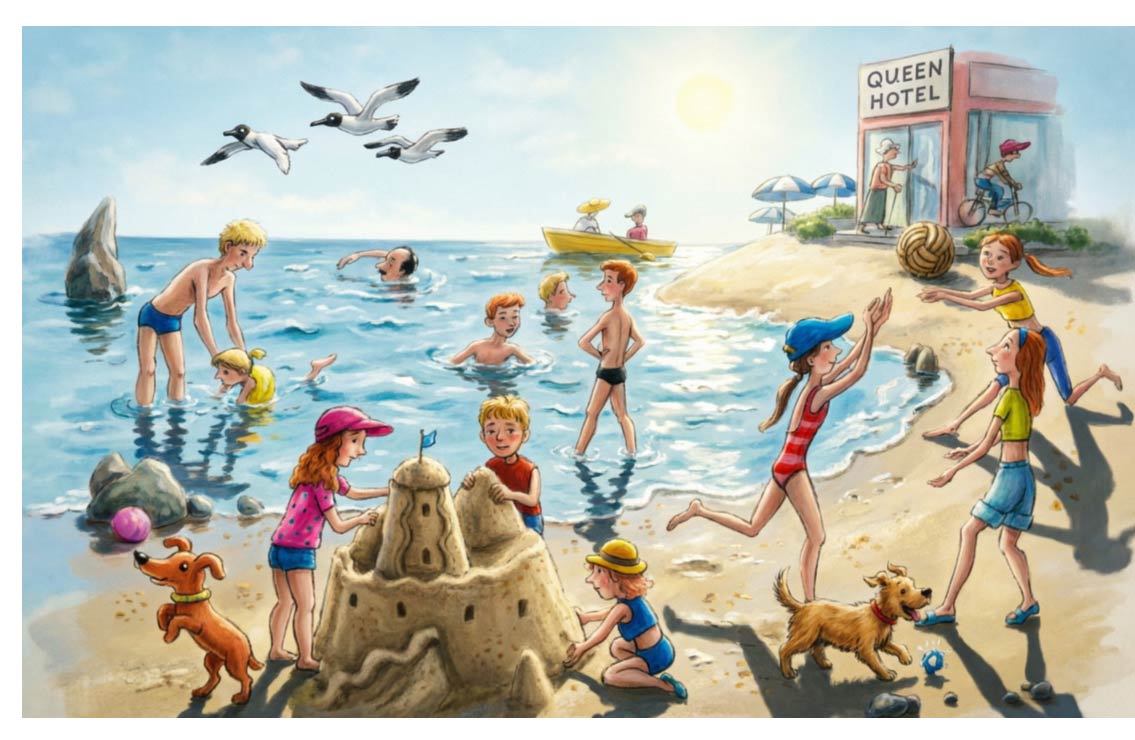
1) The boys are swimming in the sea.
2) The dog is playing with a ball.
3) The father is teaching his daughter to swim.
4) The children on the sand are making a big castle.
5) The boy at the hotel is riding a bike.
6) The girls are playing volleyball on the beach.
7) The birds are flying above the sea.
8) They are all having fun on the beach.
Перевод:
1) Мальчики купаются в море.
2) Собака играет с мячом.
3) Отец учит свою дочь плавать.
4) Дети на песке делают большой замок.
5) Мальчик в отеле катается на велосипеде.
6) Девушки играют в волейбол на пляже.
7) Птицы летают над морем.
8) Они все веселятся на пляже.
Продолжение номера 2 на следующей странице
Номер 12.
a) Read the words in transcription.
b) Listen to the recording, (20), and check your reading.
а) Прочти слова в транскрипции.
b) Прослушай запись, (20), и проверь себя.
[test], [reɪdɪˈeɪʃn], [ʌltrəˈvaɪəlɪt], [tʌn], [rɪˈzɔːsɪz], [ˈəʊzəʊn], [ˈfɪltə], [weɪst], [dʌmp], [kɔːz], [dɪˈstrʌkʃn], [pəˈluːt], [ɪnˈvaɪərənmənt], [ˈpɔɪzn], [ˈnjuːklɪə], [seɪf], [mɪks], [səˈvaɪv], [ˈwepən].
Ответ:test, radiation, ultraviolet, ton, resources, ozone, filter, waste, dump, cause, destruction, pollute, environment, poison, nuclear, safe, mix, survive, weapon
Перевод:
испытание, излучение, ультрафиолет, тонна, ресурсы, озон, фильтр, отходы, свалка, причина, разрушение, загрязнение, окружающая среда, яд, ядерный, безопасный, смесь, выживание, оружие
LET US READ AND LEARN
ДАВАЙТЕ ЧИТАТЬ И УЧИТЬСЯ
Номер 13.
a) Read and guess what the underlined words mean.
b) Look these words up to make sure you have guessed right.
а) Прочти и угадай, что значат подчеркнутые слова.
b) Проверь слова в словаре.
1. She speaks English with a strange accent ['æksənt].
2. Mrs Brown helped the police a lot. They thanked her for her cooperation [kəʊɒpəˈreɪʃn].
3. The picnickers ['pıknıkəz] made a fire near the lake.
4. Ecological problems are global [ˈgləʊbəl] problems of the twentieth century.
5. Why do we speak about the ecological crisis [ˈkraɪsɪs] nowadays?
6. People of many countries come to Moscow to take part in the international [ɪntəˈnæʃnəl] Film Festival.
7. Energy [ˈenəʤɪ] is the power from electricity, wind, etc. that helps machines work.
8. When we are happy, we often shout “Hoorah!” [hʊˈrɑː].
9. Everybody says that the film is good but I personally [ˈpɜːsnəlɪ] don’t like it.
10. The news was a terrible shock [ʃɒk]. Who could expect it?
11. Our teacher was taken to hospital and we were all shocked.
Перевод:
1. Она говорит по-английски со странным акцентом.
2. Миссис Браун очень помогла полиции. Они поблагодарили ее за сотрудничество.
3. Участники пикника развели костер у озера.
4. Экологические проблемы — это глобальные проблемы двадцатого века.
5. Почему мы сегодня говорим об экологическом кризисе?
6. Люди из многих стран приезжают в Москву, чтобы принять участие в международном кинофестивале.
7. Энергия — это энергия, получаемая от электричества, ветра и т.д., которая помогает машинам работать.
8. Когда мы счастливы, мы часто кричим «Ура!».
9. Все говорят, что фильм хороший, но лично мне он не нравится.
Номер 14.
Read the words, look them up and study the word combinations and sentences to know how to use them.
Прочти слова, посмотри их значение в словаре и выучи словосочетания и предложения, чтобы знать, как их писать.
a term [tɜːm] (n): a summer term, a winter term. In British schools the summer term runs from April to July. It was the first week of the term.
to clear [klıǝ] (v): to clear the way, to clear a chimney, to clear the table. The children were helping me clear rubbish from the lake. Will you clear the table when we finish eating? Why don’t you go for a walk to clear your head?
a pile [paɪl] (n): a pile of books, a pile of plates, a pile of clothes. The pile of books is too heavy for her to lift. We put the plates in a pile on the table.
to pile (v): He piled food on to his plate. We found the clean plates piled neatly on the kitchen table. Father took the old newspapers and piled them on top of each other.
a bit [bɪt] / a little bit: a little bit of sugar, a bit of bread, to be a bit hungry, to walk a bit. He took a bit of paper and a few bits ofwood and made a fire. They waited a bit before the bus came. — Sorry, I’d like to leave earlier today: I’m a bit tired.
Продолжение номера 14 на следующей странице
С подпиской рекламы не будет
Подключите премиум подписку со скидкой в 40% за 149 ₽






Напишите свой комментарий.