
Английский язык 9 класс учебник Баранова, Дули ответы – страница 74
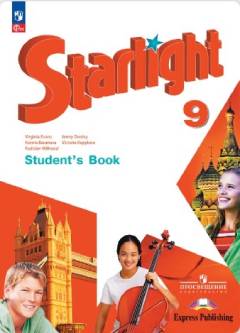
- Тип: ГДЗ, Решебник.
- Авторы: Баранова К. М., Дули Д., Копылова В. В. и др.
- Часть: без частей.
- Год: 2026.
- Серия: Звёздный английский.
- Издательство: Просвещение.

Modyle 4е — Модуль 4е
HELPING PEOPLE THROUGH ART — ПОМОЩЬ ЛЮДЯМ ЧЕРЕЗ ИСКУССТВО
VOCABULARY & READING — ЛЕКСИКА И ЧТЕНИЕ
Упражнение 1.
a) Match the parts of the camera (A–H) with the words (1–8). — Сопоставь части камеры (A–H) со словами (1–8).
1 zoom lens
2 control buttons
3 optical viewfinder
4 electronic flash
5 battery compartment
6 zoom
7 memory card slot
8 LCD panel
A — 3 optical viewfinder — оптический видоискатель
B — 2 control buttons — кнопки управления
C — 4 electronic flash — электронная вспышка
D — 1 zoom lens — зум-объектив
E — 5 battery compartment — атарейный отсек
F — 8 LCD panel — ЖК-дисплей
G — 6 zoom — зум
H — 7 memory card slot — слот для карты памяти
b) Use the words to describe the parts of a camera. — Используй эти слова, чтобы описать части камеры.
Ответ:
optical viewfinder is a window you look through to frame the shot directly. — оптический видоискатель — это окошко, через которое смотрят для непосредственного кадрирования снимка.
control buttons are physical dials and buttons used to change camera settings. — кнопки управления — это физические элементы (диски и кнопки), используемые для изменения настроек камеры.
electronic flash is a built-in light source that fires a brief flash to illuminate dark scenes. — электронная вспышка — это встроенный источник света, создающий кратковременную вспышку для освещения темных сцен.
zoom lens is a lens assembly with adjustable focal length to change magnification. — это объектив с регулируемым фокусным расстоянием, позволяющий изменять масштаб изображения.
battery compartment is a housing slot where the rechargeable battery is inserted. — батарейный отсек — это ниша в корпусе, куда вставляется аккумулятор.
LCD panel is the screen on the back used to review photos and navigate menus. — ЖК-дисплей — это экран на задней панели, используемый для просмотра фотографий и навигации по меню.
zoom is the mechanism that alters the apparent distance of the subject. — зум — это механизм, изменяющий кажущееся расстояние до объекта съемки.
memory card slot is the internal slot where the storage card is inserted to save files. — слот для карты памяти — это внутренний разъем, в который вставляется карта памяти для сохранения файлов.
Упражнение 2.
a) Read the title of the article and the first and the last paragraph. What do you think the article could be about? — Прочитай заголовок статьи, а также первый и последний абзацы. О чем, по твоему мнению, эта статья?
Ответ:I think the article is about a photographer, Kaid Ashton, who takes photos of people in poverty and shows them as posters in areas where richer people live. He also started a school in Manila for poor kids teaching them drawing, T-shirt painting and break-dancing. — Я думаю, что статья о фотографе Кейде Эштоне, который фотографирует бедных людей и показывает их в виде плакатов в районах, где живут более богатые люди. Он также открыл школу в Маниле для бедных детей, обучая их рисованию, росписи на футболках и брейк-дансу.
b) Read through and check. — Прочитай текст и проверь свои предположения.
Dream Big
A Passers-by pause in a bustling Hong Kong street. Something doesn't look right. Right next to a fancy restaurant, there's a large photo of an emaciated young girl in the slums. Looked at from the other side of the street, it seems the starving girl is being ignored by the comfortable diners. But that's the idea – or rather, it is Kaid Ashton's. He took the photo and put it up. He goes to the world's most dangerous and deprived urban areas, takes pictures of their poverty-stricken residents, then shows them where richer people can't avoid noticing them.
B Ashton's passion for photography began with other subjects, though he has always been interested in the lives of the down-and-outs. He began photographing graffiti on trains around his home in Canada. Then, after university, he moved to Taiwan. Here he began to photograph people.
C Since then, he has travelled to Iran, Venezuela, the Philippines, Colombia, Cambodia and more than two dozen other countries, seeking out those areas where most don't go. Although taxi drivers sometimes refuse to take him, Ashton believes the slum dwellers are often the friendliest and most welcoming people of all. He says the people are often keen to be photographed, especially if he helps them with a job. He asks which city they'd like their photo to be shown in. Los Angeles seems to be the most popular.
D Back home, he turns the photos into poster-sized prints. Next, he chooses where to place the poster; ideally, somewhere there will be an obvious contrast. For instance, he might select a picture of a boy picking through a rubbish dump to go next to an expensive designer boutique. Then he uses a technique called 'wheatpasting' to stick them on the walls.
E Most of the time, what Ashton is doing is against the law. It is called 'flyposting', and it is a common problem in cities. Everyone from nightclub owners to political parties cover walls with ugly advertisements and announcements. It is treated by the police as similar to graffiti, in that it is vandalism of a public space. "It's just some paper and glue," Ashton says. But it still requires someone to clean it off - and wheatpaste can be very difficult to remove.
F But Ashton does more than take and exhibit his photos. In Manila, he was particularly shocked to find people living under bridges, advertising billboards, and beside railways. He wanted to give them a way to express themselves. So he started a small school, teaching drawing, T-shirt painting and break-dancing.
G Ashton isn't without his critics, though. Certainly, we should keep in mind those less lucky than ourselves, and there's no doubt that the street kids like the creativity classes. But we can also ask: are Ashton's pictures really helping those he photographs? Do street kids in Manila actually benefit from break-dancing lessons? And is it fair to give residents of Los Angeles or Hong Kong a guilt-trip for the condition of slum-dwellers? Perhaps Ashton's method is too simplistic.
Check these words:
passer-by, bustle, emaciated, slum, deprived, poverty-stricken, resident, down-and-out, dweller, contrast, pick through rubbish, designer boutique, technique, against the law, vandalism, advertising billboard, creativity, benefit, guilt-trip, simplistic
Dream Big
APassers-by pause in a bustling Hong Kong street. Something doesn't look right. Right next to a fancy restaurant, there’s a large photo of an emaciated young girl in the slums. Looked at from the other side of the street, it seems the starving girl is being ignored by the comfortable diners. But that's the idea – or rather, it is Kaid Ashton's. He took the photo and put it up. He goes to the world's most dangerous and deprived urban areas, takes pictures of their poverty-stricken residents, then shows them where richer people can't avoid noticing them.
B Ashton's passion for photography began with other subjects, though he has always been interested in the lives of the down-and-outs. He began photographing graffiti on trains around his home in Canada. Then, after university, he moved to Taiwan. Here he began to photograph people.
C Since then, he has travelled to Iran, Venezuela, the Philippines, Colombia, Cambodia and more than two dozen other countries, seeking out those areas where most don't go. Although taxi drivers sometimes refuse to take him, Ashton believes the slum dwellers are often the friendliest and most welcoming people of all. He says the people are often keen to be photographed, especially if he helps them with a job. He asks which city they'd like their photo to be shown in. Los Angeles seems to be the most popular.
D Back home, he turns the photos into poster-sized prints. Next, he chooses where to place the poster; ideally, somewhere there will be an obvious contrast. For instance, he might select a picture of a boy picking through a rubbish dump to go next to an expensive designer boutique. Then he uses a technique called 'wheatpasting' to stick them on the walls.
E Most of the time, what Ashton is doing is against the law. It is called 'flyposting', and it is a common problem in cities. Everyone from nightclub owners to political parties cover walls with ugly advertisements and announcements. It is treated by the police as similar to graffiti, in that it is vandalism of a public space. "It’s just some paper and glue," Ashton says. But it still requires someone to clean it off - and wheatpaste can be very difficult to remove.
F But Ashton does more than take and exhibit his photos. In Manila, he was particularly shocked to find people living under bridges, advertising billboards, and beside railways. He wanted to give them a way to express themselves. So he started a small school, teaching drawing, T-shirt painting and break-dancing.
G Ashton isn't without his critics, though. Certainly, we should keep in mind those less lucky than ourselves, and there's no doubt that the street kids like the creativity classes. But we can also ask: are Ashton's pictures really helping those he photographs? Do street kids in Manila actually benefit from break-dancing lessons? And is it fair to give residents of Los Angeles or Hong Kong a guilt-trip for the condition of slum-dwellers? Perhaps Ashton's method is too simplistic.
Check these words:
passer-by, bustle, emaciated, slum, deprived, poverty-stricken, resident, down-and-out, dweller, contrast, pick through rubbish, designer boutique, technique, against the law, vandalism, advertising billboard, creativity, benefit, guilt-trip, simplistic
Перевод:
Мечтай по-крупному
А Прохожие останавливаются на оживленной улице Гонконга. Что-то выглядит не так. Рядом с модным рестораном висит большая фотография истощенной молодой девушки из трущоб. Если посмотреть на нее с другой стороны улицы, кажется, что посетители уютных закусочных игнорируют голодающую девушку. Но в этом вся идея – или, скорее, она принадлежит Кейду Эштону. Он сделал эту фотографию и выставил ее на обозрение. Он ездит в самые опасные и обездоленные городские районы мира, фотографирует их нищих обитателей, а затем показывает их там, где люди побогаче не могут их не заметить.
B Увлечение Эштона фотографией началось с других предметов, хотя его всегда интересовала жизнь бедняков. Он начал фотографировать граффити в поездах вокруг своего дома в Канаде. Затем, после университета, он переехал на Тайвань. Здесь он начал фотографировать людей.
C С тех пор он побывал в Иране, Венесуэле, Филиппинах, Колумбии, Камбодже и более чем в двух десятках других стран, отыскивая те регионы, куда большинство не ездит. Хотя таксисты иногда отказываются его везти, Эштон считает, что обитатели трущоб зачастую самые дружелюбные и гостеприимные люди из всех. Он говорит, что люди часто хотят сфотографироваться, особенно если он помогает им с работой. Он просит назвать город, в котором они хотели бы, чтобы он выставил их фотографии. Лос-Анджелес, кажется, является самым популярным вариантом.
D Вернувшись домой, он превращает фотографии в распечатки размером с плакат. Далее он выбирает, где разместить плакат; в идеале там, где будет явный контраст. Например, он может выбрать фотографию мальчика, копающегося на свалке, и повесить ее рядом с дорогим дизайнерским бутиком. Затем он использует технику под названием «витпейстинг» (оклейка пшеничным клейстером), чтобы наклеить их на стены.
E В большинстве случаев действия Эштона противоречат закону. Это называется «флайпостинг» (незаконное расклеивание), и это обычная проблема в городах. Все, от владельцев ночных клубов до политических партий, покрывают стены уродливой рекламой и объявлениями. Полиция рассматривает это как граффити, поскольку это является вандализмом в общественном пространстве. «Это всего лишь бумага и клей», — говорит Эштон. Но кому-то все равно требуется это очищать, а пшеничный клейстер удалить бывает очень сложно.
F Но Эштон делает больше, чем просто снимает и выставляет свои фотографии. В Маниле он был особенно потрясен, обнаружив людей, живущих под мостами, рекламными щитами и возле железных дорог. Он хотел дать им возможность выразить себя. Поэтому он открыл небольшую школу, где обучал рисованию, росписи на футболках и брейк-дансу.
G Однако Эштон не лишен критиков. Конечно, нужно помнить о тех, кому повезло меньше, чем нам, и нет никаких сомнений в том, что беспризорным детям нравятся занятия по творчеству. Но мы также можем задаться вопросом: действительно ли фотографии Эштона помогают тем, кого он фотографирует? Действительно ли уличные дети в Маниле получают пользу от уроков брейк-данса? И справедливо ли вызывать у жителей Лос-Анджелеса или Гонконга чувство вины за положение обитателей трущоб? Возможно, метод Эштона слишком упрощенный.
Проверь эти слова:
прохожий, оживленный, истощенный, трущобы, обездоленный, нищий, житель, бедняк, обитатель, контраст, копаться в мусоре, дизайнерский бутик, техника, против закона, вандализм, рекламный щит, творчество, польза, чувство вины, упрощенный
С подпиской рекламы не будет
Подключите премиум подписку со скидкой в 40% за 149 ₽






Напишите свой комментарий.