
Английский язык 6 класс учебник Гашимов, Меднова 2 часть ответы – страница 53

- Тип: ГДЗ, Решебник.
- Авторы: Гашимов Э. А., Меднова С. Т.
- Часть: 2.
- Год: 2023.
- Серия: Школа России (ФГОС).
- Издательство: Просвещение.

Skills Revision — Повторение навыков
Communication — Общение
Номер 5.
Look at the pictures. Make up the dialogues. There are two extra sentences. — Посмотри на картинки. Составь диалоги. Два предложения лишние.
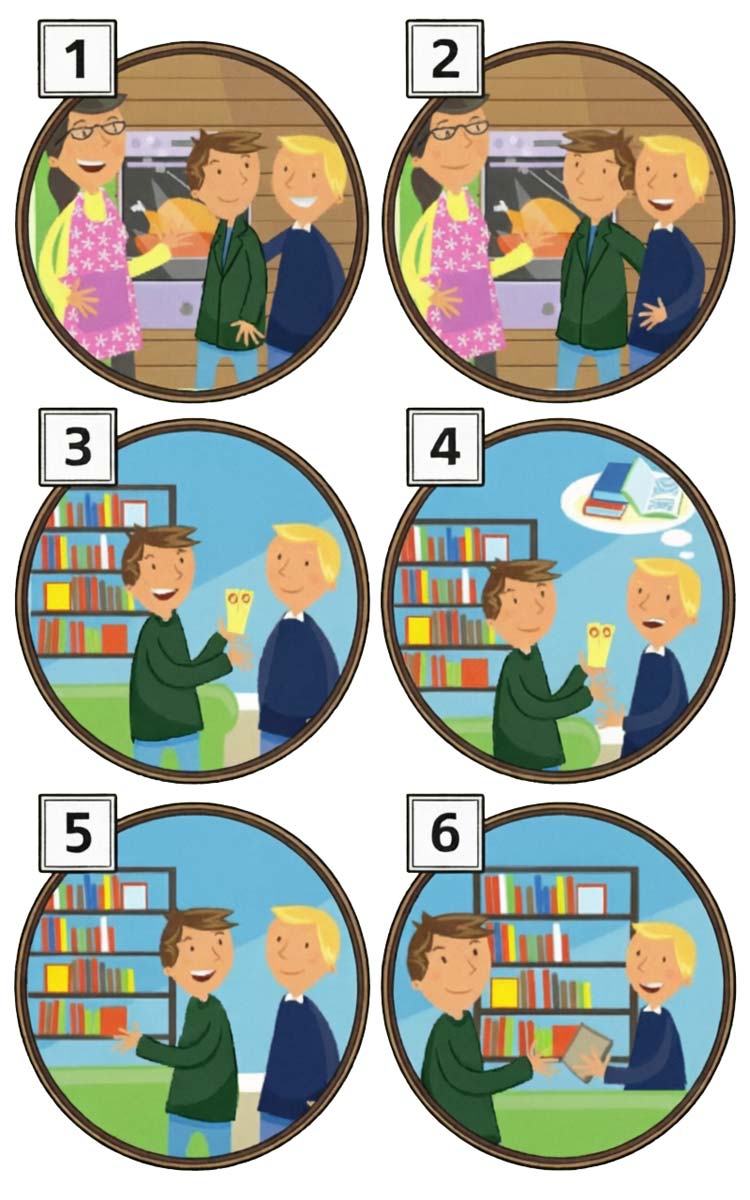
a I agree, but I don’t like tests. Can I borrow this book?
b I’ve got tickets for the football match tomorrow. Would you like to come?
c Can you stay for dinner this evening? We’re having roast chicken!
d We’ve got lots of History books! I think History is very interesting.
e I played football yesterday.
f Yes, I’d love to, thanks. I’m hungry!
g I’d love to but I must stay at home and study. I’ve got a History test on Monday.
h You’re wrong. I don’t like reading.
а Согласен, но я не люблю контрольные. Можно мне эту книгу взять?
b У меня есть билеты на завтрашний футбольный матч. Хочешь пойти?
c Можешь остаться на ужин сегодня вечером? У нас будет жареный цыпленок!
d У нас много книг по истории! Я думаю, история очень интересная.
e Я вчера играл в футбол.
f Да, с удовольствием, спасибо. Я голоден!
g С удовольствием, но я должен остаться дома и учиться. У меня контрольная по истории в понедельник.
h Ты ошибаешься. Я не люблю читать.
Диалог 1
c Can you stay for dinner this evening? We’re having roast chicken! — Ты можешь остаться на ужин сегодня вечером? У нас будет запечённая курица!
f Yes, I’d love to, thanks. I’m hungry! — Да, с удовольствием, спасибо. Я голоден!
Диалог 2
b I’ve got tickets for the football match tomorrow. Would you like to come? — У меня есть билеты на футбольный матч завтра. Ты хочешь пойти?
g I’d love to but I must stay at home and study. I’ve got a History test on Monday. — Я бы с удовольствием, но мне нужно остаться дома и учиться. У меня тест по истории в понедельник.
Диалог 3
d We’ve got lots of History books! I think History is very interesting. — У нас много книг по истории! Я думаю, история очень интересна.
a I agree, but I don’t like tests. Can I borrow this book? — Я согласен, но мне не нравятся тесты. Можно мне одолжить эту книгу?
Unnecessary sentences: — Лишние предложения:
a I agree, but I don’t like tests. Can I borrow this book? — Я согласен, но я не люблю контрольные. Можно я возьму эту книгу?
e I played football yesterday. — Вчера я играл в футбол.
Номер 6.
Ask and answer the questions in pairs. — Задайте и ответьте на вопросы в парах.
1 What’s your best friend’s home like?
2 What must you do every morning before you go to school?
3 What are you doing next weekend?
4 Are you polite? Why do you think so?
1 A: What’s your best friend’s home like? — A: Какой дом у твоего лучшего друга?
B: My best friend’s home is big and cozy. They have a nice garden and a lot of books. — B: Дом моего лучшего друга большой и уютный. У них есть красивый сад и много книг.
2 A: What must you do every morning before you go to school? — A: Что ты должен делать каждое утро перед школой?
B: I must brush my teeth and have breakfast every morning before school. — B: Я должен чистить зубы и завтракать каждое утро перед школой.
3 A: What are you doing next weekend? — A: Что ты будешь делать на следующих выходных?
B: Next weekend, I’m going to visit my grandparents and then meet my friends. — B: На следующих выходных я собираюсь навестить бабушку и дедушку, а потом встретиться с друзьями.
4 A: Are you polite? Why do you think so? — A: Ты вежливый? Почему ты так считаешь?
B: Yes, I’m polite because I always say “please” and “thank you” and listen to others carefully. — B: Да, я вежливый, потому что я всегда говорю «пожалуйста» и «спасибо» и внимательно слушаю других.
Word formation — Словообразование
Номер 1.
Use the words in CAPITALS to form a word that fits into the gap. Then read the text aloud and discuss: — Используй слова, написанные заглавными буквами, чтобы образовать слово и вставить его в пропуск. Затем прочитайте текст вслух и обсудите:
In order to save a piece of 1 …(RUSSIA) history, the Museum of Wooden Architecture invites 2 …(VISIT) to explore a living village. In the 1960s, 200 year old 3 … (BUILD) were moved to Suzdal for people to see how Russian peasants (small farmers) lived and worked in the 17th to 19th centuries. The houses are made of pine and have wonderful carvings. All the 4 … (CONSTRUCT) have the same traditional format: the ground floor is storage, with tools and animals all 5 … (COMFORT) together indoors. No one lives in this village, but it is not 6 … (DIE). The Museum of Wooden Architecture is the centre of Suzdal’s traditional festivals. They are the Cucumber Festival and the Ivan Kupala Festival, as well as more modern ones like the Night of the Museums 7 … (CELEBRATE).
Ответ:
In order to save a piece of Russian history, the Museum of Wooden Architecture invites visitors to explore a living village. In the 1960s, 200 year old buildings were moved to Suzdal for people to see how Russian peasants (small farmers) lived and worked in the 17th to 19th centuries. The houses are made of pine and have wonderful carvings. All the constructions have the same traditional format: the ground floor is storage, with tools and animals all comfortably together indoors. No one lives in this village, but it is not dying. The Museum of Wooden Architecture is the centre of Suzdal’s traditional festivals. They are the Cucumber Festival and the Ivan Kupala Festival, as well as more modern ones like the Night of the Museums celebrations.
Чтобы сохранить часть русской истории, Музей деревянной архитектуры приглашает посетителей исследовать живую деревню. В 1960-х годах двухсотлетние здания были перенесены в Суздаль, чтобы люди могли увидеть, как жили и работали русские крестьяне (мелкие фермеры) в XVII–XIX веках. Дома сделаны из сосны и украшены прекрасной резьбой. Все постройки имеют одинаковый традиционный формат: на первом этаже находится кладовая, где вместе с инструментами и животными уютно размещаются внутри. В этой деревне никто не живёт, но она не умирает. Музей деревянной архитектуры является центром традиционных суздальских фестивалей. Среди них — День Огурца и Ивана Купала, а также более современные, например, Ночь музеев.
Номер 2.
Imagine life in a village in the 19th century. Talk about one day of your life with your family there. — Представь жизнь в деревне в 19 веке. Расскажи об одном дне из своей жизни с семьёй.
Ответ:
Our wooden house stands among tall pine trees. In the early morning, I wake up to the sound of roosters crowing. I help my parents feed the animals and collect eggs from the chicken coop. After a simple breakfast, I go to help in the garden, planting vegetables for our food.
During the day, my mother prepares bread and soups using fresh ingredients from our farm. We work hard but spend time together telling stories in the evening by the fireplace. Sometimes, neighbors visit, and we celebrate traditional festivals with singing and dancing.
Наш деревянный дом стоит среди высоких сосен. Рано утром я просыпаюсь от крика петухов. Я помогаю родителям кормить животных и собирать яйца из курятника. После простого завтрака я иду помогать в огороде, сажая овощи для нашей еды.
Днём моя мама печёт хлеб и готовит супы из свежих продуктов с нашей фермы. Мы много работаем, но вечером вместе проводим время, рассказывая истории у камина. Иногда приходят соседи, и мы отмечаем традиционные праздники с пением и танцами.
Номер 3.
Do you think life was easier or more difficult in the 19th century? Why? Give your reasons. — Как ты думаешь, жизнь в 19-м веке была проще или сложнее? Почему? Приведи причины.
Ответ:
I think life was more difficult in the 19th century. People had to do a lot of hard work every day without machines, like planting crops and taking care of animals by hand. They didn’t have things like cars, computers, or medicine that we have now. Sometimes, they didn’t have enough food or good doctors when they were sick.
Я думаю, что в 19 веке жизнь была более трудной. Людям приходилось много тяжело работать каждый день без машин, например, сажать урожай и заботиться о животных вручную. У них не было таких вещей, как машины, компьютеры или медицина, которые есть у нас сейчас. Иногда у них не хватало еды или хороших врачей, когда они болели.
С подпиской рекламы не будет
Подключите премиум подписку со скидкой в 40% за 149 ₽






Напишите свой комментарий.