
Английский язык 10 класс учебник Ваулина, Дули ответы – страница 46
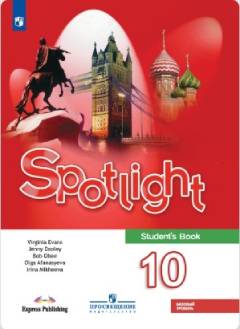
- Тип: ГДЗ, Решебник.
- Авторы: Ваулина Ю. Е., Дули Д., Подоляко О. Е.
- Часть: без частей.
- Год: 2026.
- Серия: Школа России (ФГОС).
- Издательство: Просвещение.

3a READING SKILLS
3a НАВЫКИ ЧТЕНИЯ
VOCABULARY
СЛОВАРНЫЙ ЗАПАС
TYPES OF SCHOOLS & SCHOOL LIFE
ТИПЫ ШКОЛ И ШКОЛЬНАЯ ЖИЗНЬ
Номер 1.
a) Match the types of schools (1–6) to the descriptions (A–F). Which are the most common / uncommon in your country? What type of school do you go to?
a) Сопоставь типы школ (1–6) с описаниями (A–F). Какие из них наиболее распространены / необычны в твоей стране? В какую школу ты ходишь?
1. boarding school
2. single-sex school
3. co-educational school
4. state school
5. private school
6. specialist school
A. school for boys and girls.
B. A school you usually have to pay to go to.
C. A school students go to for a particular reason (e. g. to become actors).
D. A school for only boys or only girls.
E. A school owned by the government.
F. A school which students live in during school term.
1. F — boarding school → A school which students live in during school term.
2. D — single-sex school → A school for only boys or only girls.
3. A — co-educational school → A school for boys and girls.
4. E — state school → A school owned by the government.
5. B — private school → A school you usually have to pay to go to.
6. C — specialist school → A school students go to for a particular reason (e. g. to become actors).
Перевод:
1. F — школа-интернат → Школа, в которой учащиеся проживают в течение учебного года.
2. D — школа для однополых пар → Школа только для мальчиков или только для девочек.
3. A — школа с совместным обучением → школа для мальчиков и девочек.
4. E — электронная государственная школа → Школа, принадлежащая правительству.
5. B — частная школа → Школа, за посещение которой обычно приходится платить.
6. C — специализированная школа → Школа, в которую учащиеся ходят по определенной причине (например, чтобы стать актерами).
b) Read the following statements. Which ones are true for your school? What would you like to change? Why? Discuss.
b) Прочти следующие высказывания. Что бы ты хотел изменить? Почему? Обсуди.
Which ones are true for your school?
Students wear a school uniform.
There are lots of rules.
Facilities and equipment are good (e. g. libraries, science labs, sports equipment).
The teachers are strict.
Students are motivated.
There is a selection of unusual
subjects to choose from.
Students sit a lot of exams.
Most students take part in extra-curricular activities (e. g. drama, sports).
Students get a lot of homework.
Most students live nearby.
Example:
A: I like wearing a school uniform.
B: I don’t. I’d rather wear something more fashionable to school ...
• Students wear a school uniform. — True. We have a strict uniform policy.
• There are lots of rules. — True. The school has clear rules about behaviour and attendance.
• Facilities and equipment are good. — True. We have modern science labs and a well-stocked library.
• The teachers are strict. — Partly true. Some teachers are strict, others are more relaxed.
• Students are motivated. — Mostly true. Many students want to do well in exams.
• There is a selection of unusual subjects to choose from. — False. Our curriculum is quite standard.
• Students sit a lot of exams. — True. We have regular tests and mock exams before the finals.
• Most students take part in extra-curricular activities. — True. There are sports teams and a drama club that many join.
• Students get a lot of homework. — True. On average, we get homework every day.
• Most students live nearby. — True. The school is in the city centre, so most students live within a few kilometres.
A: I think we should have more unusual subjects to choose from, like coding or photography. It would make learning more interesting and prepare us for modern jobs.
B: I agree! Also, I’d like to see less homework. Sometimes I spend three hours on it every evening — it’s too much. I don’t have time for hobbies.
A: That’s a good point. And maybe the rules could be a bit more flexible. For example, I don’t see why we can’t wear casual clothes on Fridays.
B: Exactly! A casual Friday would boost everyone’s mood. Plus, it would teach us responsibility — we’d still have to behave well even without a uniform.
A: And what about the sports facilities? The gym is quite old. If we had a new one, more students would probably join sports clubs.
B: Yes, investing in better equipment would be great. It’s important to stay active, especially when we spend so much time studying.
Перевод:
• Учащиеся носят школьную форму. — правда. У нас строгая единая политика.
• Существует множество правил. — правда . В школе действуют четкие правила поведения и посещаемости.
• Помещения и оборудование хорошие. — правда. У нас есть современные научные лаборатории и хорошо укомплектованная библиотека.
• Преподаватели строгие. Отчасти это правда. Некоторые преподаватели строгие, другие более спокойные.
• Студенты мотивированы. — В основном это правда. Многие студенты хотят хорошо сдать экзамены.
• Есть несколько необычных предметов на выбор. — Неправда. Наша учебная программа довольно стандартная.
• Студенты сдают много экзаменов. — правда. Перед выпускными экзаменами мы регулярно проводим тесты и пробные экзамены.
• Большинство учащихся принимают участие во внеклассных мероприятиях. — правда. Есть спортивные команды и театральный кружок, в который многие вступают.
• Учащиеся получают много домашних заданий. — правда. В среднем мы получаем домашние задания каждый день.
• Большинство студентов живут неподалеку. — правда. Школа находится в центре города, поэтому большинство учеников живут в радиусе нескольких километров.
A: Я думаю, нам следует выбрать более необычные предметы, например, программирование или фотографию. Это сделало бы обучение более интересным и подготовило бы нас к современной работе.
B: Согласен! Кроме того, я бы хотел, чтобы домашних заданий было поменьше. Иногда я трачу на это по три часа каждый вечер — это слишком много. У меня нет времени на хобби.
A: Это хорошая мысль. И, возможно, правила могли бы быть немного более гибкими. Например, я не понимаю, почему мы не можем носить повседневную одежду по пятницам.
B: Совершенно верно! Повседневная пятница подняла бы настроение всем. К тому же, это научило бы нас ответственности — мы все равно должны были бы хорошо себя вести даже без формы.
А: А как насчет спортивных сооружений? Тренажерный зал довольно старый. Если бы у нас был новый, больше студентов, вероятно, записались бы в спортивные секции.
B: Да, было бы здорово инвестировать в лучшее оборудование. Важно оставаться активным, особенно когда мы тратим так много времени на учебу.
READING
ЧТЕНИЕ
Номер 2.
Read the text on pp. 46–47. Match the paragraphs (A–E) with the headings (1–6). Put your answers into the table. Each number can only be used once. There is one extra heading.
Задние ЕГЭ. Прочитай текст на стр. 46–47. Сопоставьте абзацы (А–Е) с заголовками (1–6). Занеси свои ответы в таблицу. Каждое число можно использовать только один раз. Есть еще один дополнительный раздел.
1. To and From School
2. School Rules
3. Education or No Education
4. Schools of Every Shape and Size
5. Studying Hours
6. Home Schooling
SCHOOLS AROUND THE WORLD
Do you look forward to going to school or do you absolutely dread it? Or, perhaps you’d prefer to go to school somewhere else! This week, Go! magazine takes a look at how schools are different 1) over / around / from / through the world.
A
There are many types of schools in the world. Some are expensive, private boarding schools, like Rugby School in England where the game of rugby was invented! There are also specialist schools, like drama schools, dance schools or dozens of acrobatic schools in Wuqiao, China. It might sound like fun, but, as 13-year-old Zhang Li explains, "Our training starts at 5:30 am. It’s very hard, but these skills will help me 2) win / get / take / earn a living when I leave." There are also a wide range of school subjects at different schools. At Holden High School in the USA, subjects include comic book art, photography, song writing and yoga.
B
At a school in the Annapurna mountains in Nepal, classes don’t start until 10 am because a lot of students have to walk for about an hour to get there. In Japan, it isn’t unusual for students to 3) pass / need / spend / be two hours or more getting to school on public transport. "It’s not so bad," says 15-year-old Keiko from Tokyo. "I sometimes sleep or study on the train, and it’s a great way to catch 4) up / on / from / together with my friends."
C
The average high school day in the UK and the US is 6.5 hours. Students in Korea and Greece, 5) therefore / however / moreover / thus, are not so lucky! After school they attend extra classes in private schools. "On a typical day," says Jie Kim from Seoul, South Korea, "I don’t get home until midnight, but if I don’t study hard, I won't 6) get / be / go / apply into a good university."
D
All schools have rules, but sometimes they are really strict. At Eton College, a very famous boys' boarding school in England, the students have a smart but very old-fashioned uniform with a long jacket, dark trousers and smart shirt. In Japan, everyone has to participate in 'o soji', or the cleaning of the school, before they go home, whereas at Summerhill School in England, it’s the students who 7) put / say / make / give the rules!
E
So, is your school better or worse than schools in other parts of the world? No matter what your answer is, we shouldn't forget that 300 million children in the world don't have any school to go to. So even if you'd like to change some things about your school, you really are one of the lucky ones!
A — 4. Schools of Every Shape and Size
B — 1. To and From School
C — 5. Studying Hours
D — 2. School Rules
E — 3. Education or No Education
SCHOOLS AROUND THE WORLD
Do you look forward to going to school or do you absolutely dread it? Or, perhaps you’d prefer to go to school somewhere else! This week, Go! magazine takes a look at how schools are different 1) around the world.
A
There are many types of schools in the world. Some are expensive, private boarding schools, like Rugby School in England where the game of rugby was invented! There are also specialist schools, like drama schools, dance schools or dozens of acrobatic schools in Wuqiao, China. It might sound like fun, but, as 13-year-old Zhang Li explains, "Our training starts at 5:30 am. It’s very hard, but these skills will help me 2) earn a living when I leave." There are also a wide range of school subjects at different schools. At Holden High School in the USA, subjects include comic book art, photography, song writing and yoga.
B
At a school in the Annapurna mountains in Nepal, classes don’t start until 10 am because a lot of students have to walk for about an hour to get there. In Japan, it isn’t unusual for students to 3) spend two hours or more getting to school on public transport. "It’s not so bad," says 15-year-old Keiko from Tokyo. "I sometimes sleep or study on the train, and it’s a great way to catch 4) up / on / from / together with my friends."
C
The average high school day in the UK and the US is 6.5 hours. Students in Korea and Greece, 5) however, are not so lucky! After school they attend extra classes in private schools. "On a typical day," says Jie Kim from Seoul, South Korea, "I don’t get home until midnight, but if I don’t study hard, I won't 6) get into a good university."
D
All schools have rules, but sometimes they are really strict. At Eton College, a very famous boys' boarding school in England, the students have a smart but very old-fashioned uniform with a long jacket, dark trousers and smart shirt. In Japan, everyone has to participate in 'o soji', or the cleaning of the school, before they go home, whereas at Summerhill School in England, it’s the students who 7) make the rules!
E
So, is your school better or worse than schools in other parts of the world? No matter what your answer is, we shouldn't forget that 300 million children in the world don't have any school to go to. So even if you'd like to change some things about your school, you really are one of the lucky ones!
Перевод:
A — 4. Школы любой формы и размера
B — 1. В школу и обратно
C — 5. Часы занятий
D — 2. Школьные правила
E — 3. Получать образование или не получать его?
ШКОЛЫ ПО ВСЕМУ МИРУ
Вам не терпится пойти в школу или вы просто боитесь этого? Или, возможно, вы предпочли бы учиться где-нибудь в другом месте! На этой неделе журнал Go! рассказывает о том, чем отличаются школы: 1) по всему миру.
A
В мире существует множество школ. Некоторые из них являются дорогими частными школами-интернатами, как, например, школа регби в Англии, где была изобретена игра регби! Есть также специализированные школы, такие как театральные школы, школы танцев или десятки школ акробатики в Уцяо, Китай. Это может показаться забавным, но, как объясняет 13-летняя Чжан Ли, «Наши тренировки начинаются в 5:30 утра. Это очень сложно, но эти навыки помогут мне 2) заработать на жизнь, когда я уйду». Кроме того, в разных школах существует широкий спектр школьных предметов. В средней школе Холдена в США изучаются такие предметы, как рисование комиксов, фотография, написание песен и йога.
B
В школе в горах Аннапурна в Непале занятия начинаются только в 10 утра, потому что многим ученикам приходится идти пешком около часа, чтобы добраться туда. В Японии нет ничего необычного в том, что учащимся приходится добираться до школы на общественном транспорте по два часа и более. «Это не так уж плохо», — говорит 15-летняя Кейко из Токио. "Иногда я сплю или занимаюсь в поезде, и это отличный способ наверстать упущенное со своими друзьями".
C
Средняя продолжительность школьного дня в Великобритании и США составляет 6,5 часов. Учащиеся в Корее и Греции, 5) однаком, им не так повезло! После школы они посещают дополнительные занятия в частных школах. «В обычный день, — говорит Цзе Ким из Сеула, Южная Корея, — я прихожу домой не раньше полуночи, но если я не буду усердно заниматься, то не смогу 6) поступить в хороший университет».
D
Во всех школах есть правила, но иногда они действительно строгие. В Итонском колледже, очень известной школе-интернате для мальчиков в Англии, ученики носят элегантную, но очень старомодную форму с длинным пиджаком, темными брюками и элегантной рубашкой. В Японии каждый должен принять участие в «о содзи», или уборке школы, перед тем, как отправиться домой, в то время как в школе Саммерхилл в Англии именно ученики 7) устанавливают правила!
E
Итак, ваша школа лучше или хуже школ в других частях света? Каким бы ни был ваш ответ, мы не должны забывать, что 300 миллионам детей в мире не в какую школу ходить. Так что, даже если вы хотели бы что-то изменить в своей школе, вы действительно один из счастливчиков!
С подпиской рекламы не будет
Подключите премиум подписку со скидкой в 40% за 149 ₽






Напишите свой комментарий.