
Английский язык 10 класс учебник Ваулина, Дули ответы – страница 124
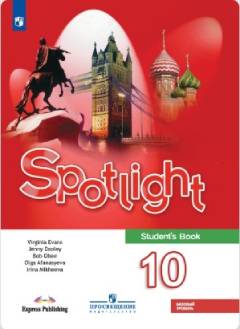
- Тип: ГДЗ, Решебник.
- Авторы: Ваулина Ю. Е., Дули Д., Подоляко О. Е.
- Часть: без частей.
- Год: 2026.
- Серия: Школа России (ФГОС).
- Издательство: Просвещение.

7b LISTENING & SPEAKING SKILLS
7b НВЫКИ АУДИРОВАНИЯ И ГОВОРЕНИЯ
VOCABULARY
СЛОВАРНЫЙ ЗАПАС
TYPES OF PERFORMANCES
ВИДЫ ВЫСТУПЛЕНИЙ
Номер 1.
Listen to the extracts (1–4). Which of the following is each one from?
Прослушай фрагменты (1-4). Какие из них относятся к указанным ниже?
• an opera
• a musical
• a ballet
• a music concert
A musical is recognized by a combination of spoken dialogues, songs, and orchestral music; the vocals are more "pop" or jazzy.
A music concert is a solo or group performance of songs / instrumental music without theatrical staging; applause can be heard between the compositions.
An opera — singing (arias, ensembles) in a foreign language (often Italian, French), full orchestra; no spoken lines.
A ballet is mostly instrumental orchestral music (often classical), without vocals; the rhythm and dynamics correspond to dancing.
Перевод:
Мюзикл распознается по сочетанию разговорных диалогов, песен и оркестровой музыки; вокал более "попсовый" или джазовый.
Музыкальный концерт — это сольное или групповое исполнение песен / инструментальной музыки без театральной постановки; в перерывах между композициями можно услышать аплодисменты.
Опера — пение (арии, ансамбли) на иностранном языке (часто итальянском, французском) в полном составе оркестра; никаких разговорных реплик.
Балет — это в основном инструментальная оркестровая музыка (часто классическая), без вокала; ритм и динамика соответствуют танцу.
Номер 2.
Match these words with their descriptions (1–8).
Соедини слова с описаниями (1–8).
• stalls
• orchestra
• balcony
• stage
• opera glasses
• aisle
• curtain
• usher
1. The performance takes place on this. ▸ stage
2. This comes down at the end of the performance.
3. Seats on the same level as the stage.
4. This person shows you to your seat.
5. You use these to see the stage better when your seat is far away.
6. Yo walk down this to find your seat.
7. You can find cheaper seats here.
8. This plays music during the performance.
1. The performance takes place on this. → stage
2. This comes down at the end of the performance. → curtain
3. Seats on the same level as the stage. → stalls
4. This person shows you to your seat. → usher
5. You use these to see the stage better when your seat is far away. → opera glasses
6. You walk down this to find your seat. → aisle
7. You can find cheaper seats here. → balcony
8. This plays music during the performance. → orchestra
Перевод:
1. Представление проходит на этом. → сцена
2. Она опускается в конце представления. → занавес
3. Места на одном уровне со сценой. → партер
4. Этот человек проводит тебя к месту. → билетер
5. Вы используете их, чтобы лучше видеть сцену, когда твое место находится далеко. → театральный бинокль
6. Ты проходишь по ним, чтобы найти свое место. → проход
7. Здесь вы можете найти места подешевле. → балкон
8. Здесь звучит музыка во время выступления. → оркестр
Reading
Чтение
Номер 3.
a) Read sentences A–F. Where are the speakers? What are they talking about?
a) Прочитай суждения A–F. Где находятся говорящие? О чем они разговаривают?
Where: at the theater (before the opera starts).
What: they discuss their seats, try to find a better view of the stage, and decide to move.
Перевод:
Где: в театре (перед началом оперы).
О чём: обсуждают свои места, пытаются найти лучший обзор сцены и решают пересесть.
b) Complete the dialogue with the sentences (A–F). Listen and check. Explain the words in bold.
b) Заполни диалоги фрагментами (A–F). Прослушай и проверь себя. Объясни, слова, выделенные жирным.
A OK, let’s risk it!
B I agree! So... where are we sitting? In the stalls?
C What now?
D I don’t know. They might be reserved ...
E Oh, my goodness, I can hardly see the stage!
F Oh, that's OK ... which row are we on?
Jo: This theatre is beautiful! Perfect surroundings for an opera!
Sandra: 1) .....
Jo: No, the stalls were fully booked. Our seats are somewhere in the balcony.
Sandra: 2) .....
Jo: Well, let’s see our tickets say W10 and W11 so that’s ... err ... five ... six rows up from here ... Oh no! We’re in the very back row!
Sandra: 3) .....
Jo: Look! There’s a whole row of empty seats a few rows further down. Let’s move over there!
Sandra: 4)
Jo: I don’t think so. The performance is about to start.
Sandra: 5) .....
Jo: ... Ah, that's better ... Oh no!
Sandra: 6) .....
Jo: Look! The man who just sat down in front of me is really tall! I can’t see a thing!
Jo: This theatre is beautiful! Perfect surroundings for an opera!
Sandra: 1) B I agree! So... where are we sitting? In the stalls?
Jo: No, the stalls were fully booked. Our seats are somewhere in the balcony.
Sandra: 2) F Oh, that's OK ... which row are we on?
Jo: Well, let’s see our tickets say W10 and W11 so that’s ... err ... five ... six rows up from here ... Oh no! We’re in the very back row!
Sandra: 3) E Oh, my goodness, I can hardly see the stage!
Jo: Look! There’s a whole row of empty seats a few rows further down. Let’s move over there!
Sandra: 4) A OK, let’s risk it!
Jo: I don’t think so. The performance is about to start.
Sandra: 5) D I don’t know. They might be reserved.
Jo: ... Ah, that's better ... Oh no!
Sandra: 6) C What now?
Jo: Look! The man who just sat down in front of me is really tall! I can’t see a thing!
surroundings — the things and conditions around a person or thing. It’s about the environment, the area, or the setting. It can be physical (like trees and buildings) or even social (like the people you’re with).
fully booked — all the available spaces, rooms, tables, or appointments for a particular time are taken. There’s no more room or availability.
further down — indicates a position or point that is more distant along a line, path, or sequence. It means "more ahead" or "later on" (in a sequence or text).
is about — it indicates an approximate time or amount.
Intention / Imminence: it means something is going to happen very soon.
Перевод:
Джо: Этот театр прекрасен! Идеальная обстановка для оперы!
Сандра: 1) Согласна! Итак ... где мы будем сидеть? В партере?
Джо: Нет, партер был полностью занят. Наши места где-то на балконе.
Сандра: 2) Если да, то все в порядке ... в каком ряду мы сидим?
Джо: Что ж, давайте посмотрим, на наших билетах указаны W10 и W11, так что это ... э-э-э ... пять ... в шести рядах отсюда ... О, нет! Мы сидим в самом заднем ряду!
Сандра: 3) О, боже мой, я почти не вижу сцену!
Джо: Смотрите! Там целый ряд свободных мест несколькими рядами дальше. Давайте пройдем туда!
Сандра: 4) А ладно, давай рискнем!
Джо: Я так не думаю. Представление вот-вот начнется.
Сандра: 5) Я не знаю. Возможно, они зарезервированы.
Джо: ... Так-то лучше ... О, нет!
Сандра: 6) И что теперь?
Джо: Смотри! Мужчина, который только что сел передо мной, очень высокий! Я ничего не вижу!
окружение — предметы и условия, окружающие человека или предметную область. Речь идет об окружающей среде, районе или обстановке. Это может быть физическое (например, деревья и здания) или даже социальное (например, люди, с которыми вы находитесь).
полностью забронировано — все свободные места, залы, столики или встречи на определенное время заняты. Свободных мест больше нет.
далее вниз — указывает на положение или точку, которые находятся дальше по линии, пути или последовательности. Это означает "еще впереди" или "позже" (в последовательности или тексте).
примерно — указывает на приблизительное время или количество.
Намерение / Неизбежность: означает, что что-то произойдет очень скоро.
Speaking
Говорени
Номер 4.
You are at the theatre but your seats are in the back row. You want to change them. Act out your dialogue.
Вы находитесь в театре, но ваши места в последнем ряду. Вы хотите их поменять. Разыграйте свой диалог.
A: Oh no, we’re in the back row! I can barely see the stage from here.
B: Yeah, it’s too far. Do you think we could move closer?
A: Let’s ask the usher. Excuse me, sir, is it possible to change our seats? These are too far from the stage.
B: Yes, we’d like to move to the stalls if there are any free seats.
Usher: I’m sorry, the stalls are full. But you can try the front rows of the balcony — they’re a bit closer.
A: That would be great, thank you!
B: Perfect! Let’s go there quickly — the performance is about to start!
Перевод:
А: О нет, мы в заднем ряду! Я едва вижу сцену отсюда.
В: Да, это слишком далеко. Как вы думаете, мы могли бы подойти поближе?
А: Давайте спросим билетера. Извините, сэр, можно ли пересесть на другие места? Они слишком далеко от сцены.
В: Да, мы хотели бы пересесть в партер, если есть свободные места.
Билетер: Извините, партер полон. Но вы можете попробовать занять первые ряды на балконе — они немного ближе.
А: Это было бы здорово, спасибо!
В: Отлично! Давай быстрее пойдем туда — представление вот-вот начнется!
С подпиской рекламы не будет
Подключите премиум подписку со скидкой в 40% за 149 ₽






Напишите свой комментарий.